
Do you know what…?
Why did America send Black jazz musicians to represent freedoms it denied them at home?
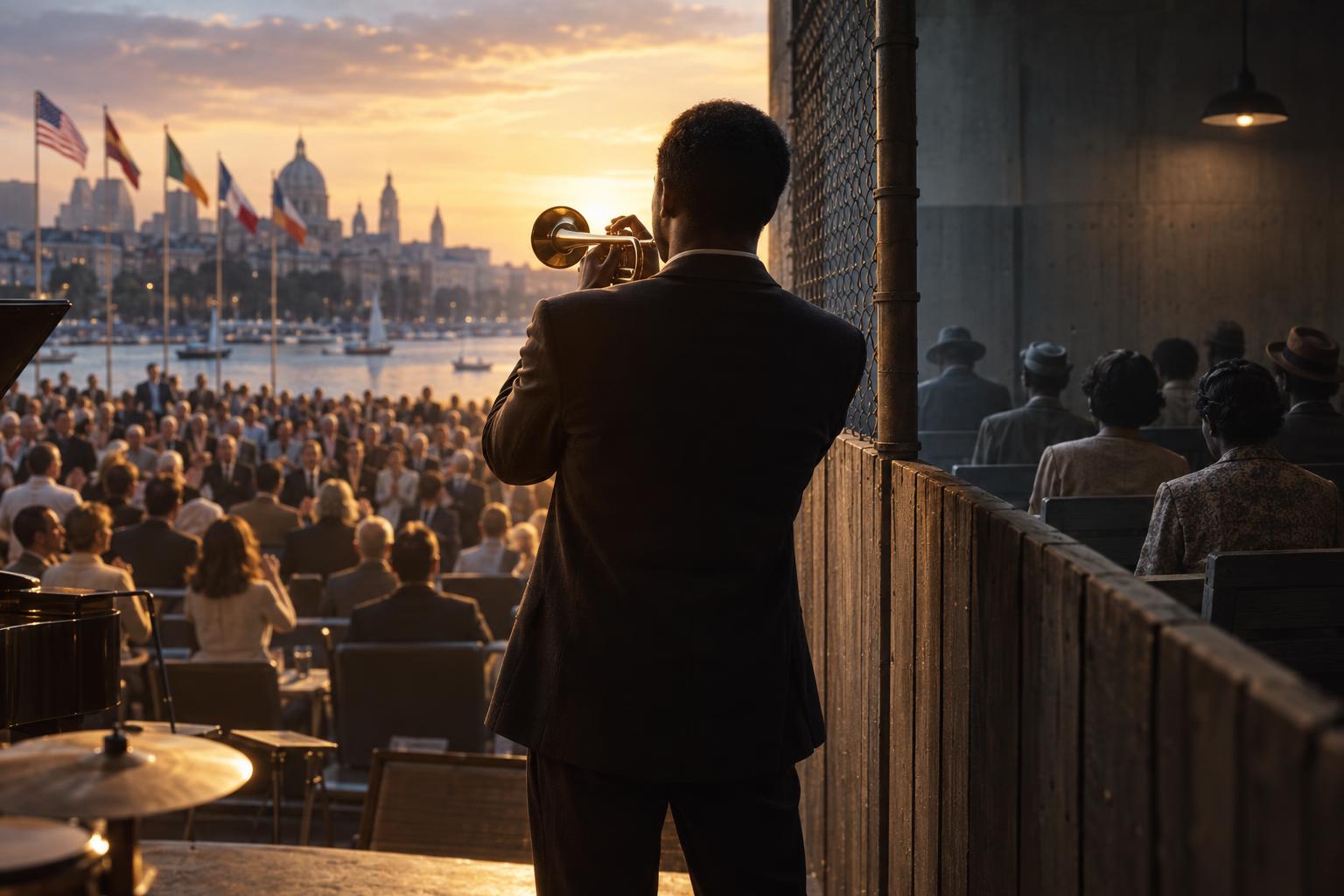
AI-generated image, not a photograph. This edition's article, audio and test are AI-generated and published automatically without prior human review. Sources · Editorial & AI Policy
Listen to today’s article
In March 1956, the State Department enlisted Dizzy Gillespie as a jazz ambassador, sending his band through southern Europe, the Middle East and South Asia. Black musicians were representing American ideals overseas while Jim Crow segregation persisted at home: the message was the reality. The contradiction was central to the diplomatic calculation. In 1955, Congressman Adam Clayton Powell Jr. had advocated deploying jazz in the Cold War cultural contest, including to counter Soviet accounts of American racism. Washington wanted to improve its international image; that objective did not make the discrimination described by its critics imaginary.
The State Department describes the programme as an effort to connect American musicians with overseas artists and audiences while countering hostile narratives. Jazz offered something a policy statement could not: an encounter with artistic expression rather than an official argument. Nor was its reach confined to concert halls. According to the department, Willis Conover's Voice of America shortwave programme carried jazz to millions of listeners. No precise audience count or measurement method accompanies that description in the available evidence. The diplomatic instrument was therefore not simply the travelling band, but also broadcasting that could take the music beyond the venue.
Louis Armstrong, Dave Brubeck, Duke Ellington, Benny Goodman and Sarah Vaughan also served as jazz ambassadors during the period from the 1950s to the 1970s. Yet participation was not to endorsing every government policy, and the musicians should not be assigned a shared political position. Official accounts establish the programme's purposes, not proof of its effectiveness or a uniform audience response. That distinction matters whenever governments enlist culture to build international relationships: artistic cannot simply be equated with political approval. These musicians could represent American creativity without resolving the contradiction between the country's proclaimed ideals and its unequal treatment of Black citizens.