
Do you know what…?
How did aircraft keep western Berlin supplied without breaking through its surface blockade?
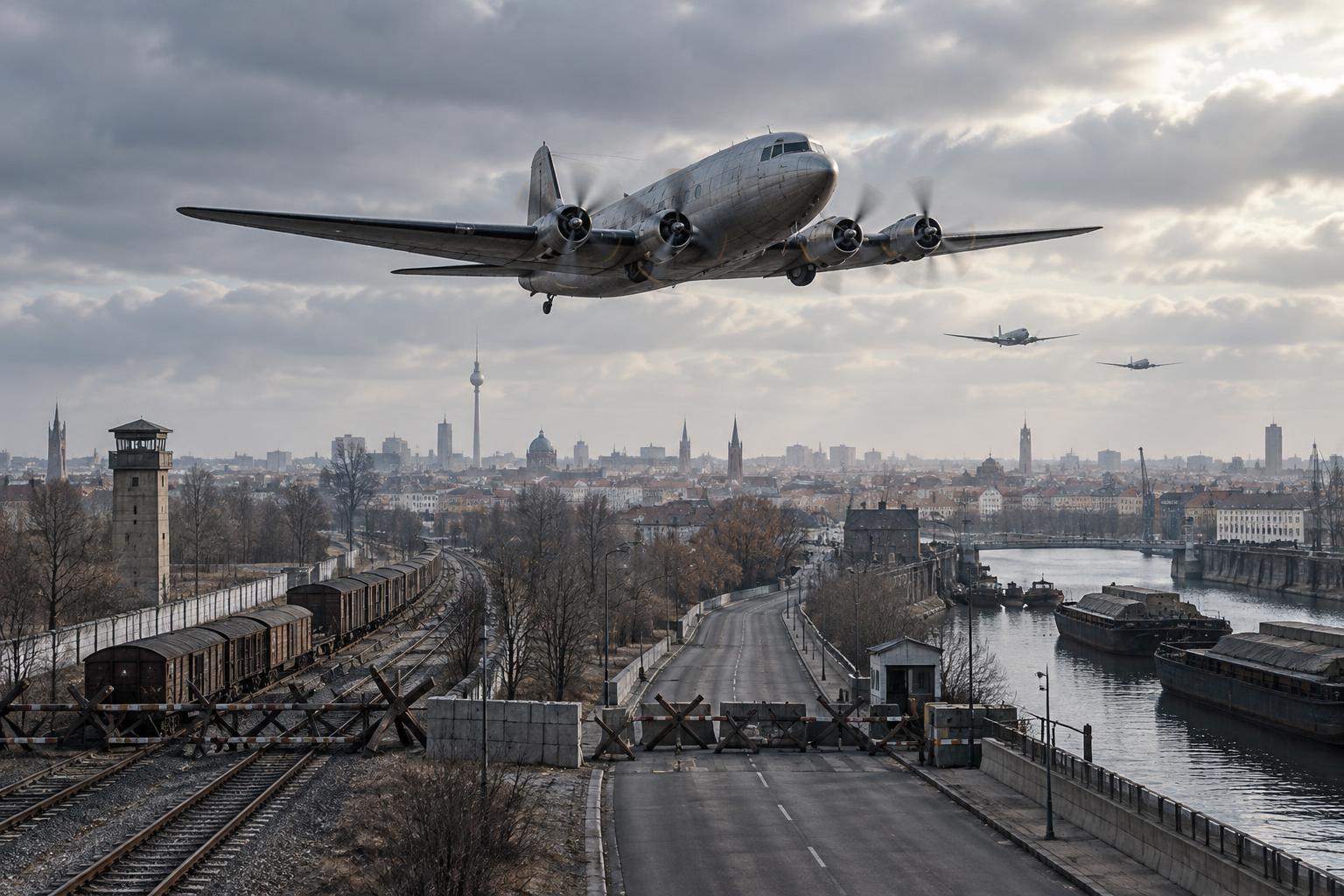
AI-generated image, not a photograph. This edition's article, audio and test are AI-generated and published automatically without prior human review. Sources · Editorial & AI Policy
Listen to today’s article
A blockade can close roads without closing every route into a city. On 24 June 1948, Soviet forces cut rail, road and water access to Berlin’s Allied-controlled sectors. Rather than force a passage through those barriers, the Western Allies began supplying the western sectors by air on 26 June. Aircraft became a lifeline for more than two million residents, carrying food and other necessities. The strategic challenge was to without forcibly reopening its surface routes. In this early Cold War confrontation, maintaining civilian supplies became a means of resisting political pressure.
The operation hinged on treating aviation as a supply network, not an occasional emergency delivery. At the outset, the available airfields were Tempelhof in the American sector and Gatow in the British sector, each with one runway. Airfield capacity therefore mattered alongside the availability of aircraft: cargo had to reach the ground before it could serve the city. The less familiar burden was fuel. According to the U.S. Air Force’s historical account, coal represented roughly 65 percent of the cargo tonnage flown into western Berlin. This was an airborne energy supply as much as a food operation: keeping people fed was only part of sustaining urban life.
The Soviet government lifted the blockade on 12 May 1949, but the airlift continued until the end of September. Those separate endings distinguish the reopening of surface access from the of airborne deliveries. The achievement was not a forced breakthrough: it was the preservation of western Berlin through sustained supply, the blockade’s purpose without reopening ground routes by force. Today, the Truman Library’s airlift collection preserves government documents, oral histories and background material. These records provide a concrete basis for examining how civilian logistics can serve strategic ends, without assuming that the operation directly shaped any particular contemporary relief mission.