
Do you know what…?
Why did France propose sharing control of coal and steel with its former enemy?
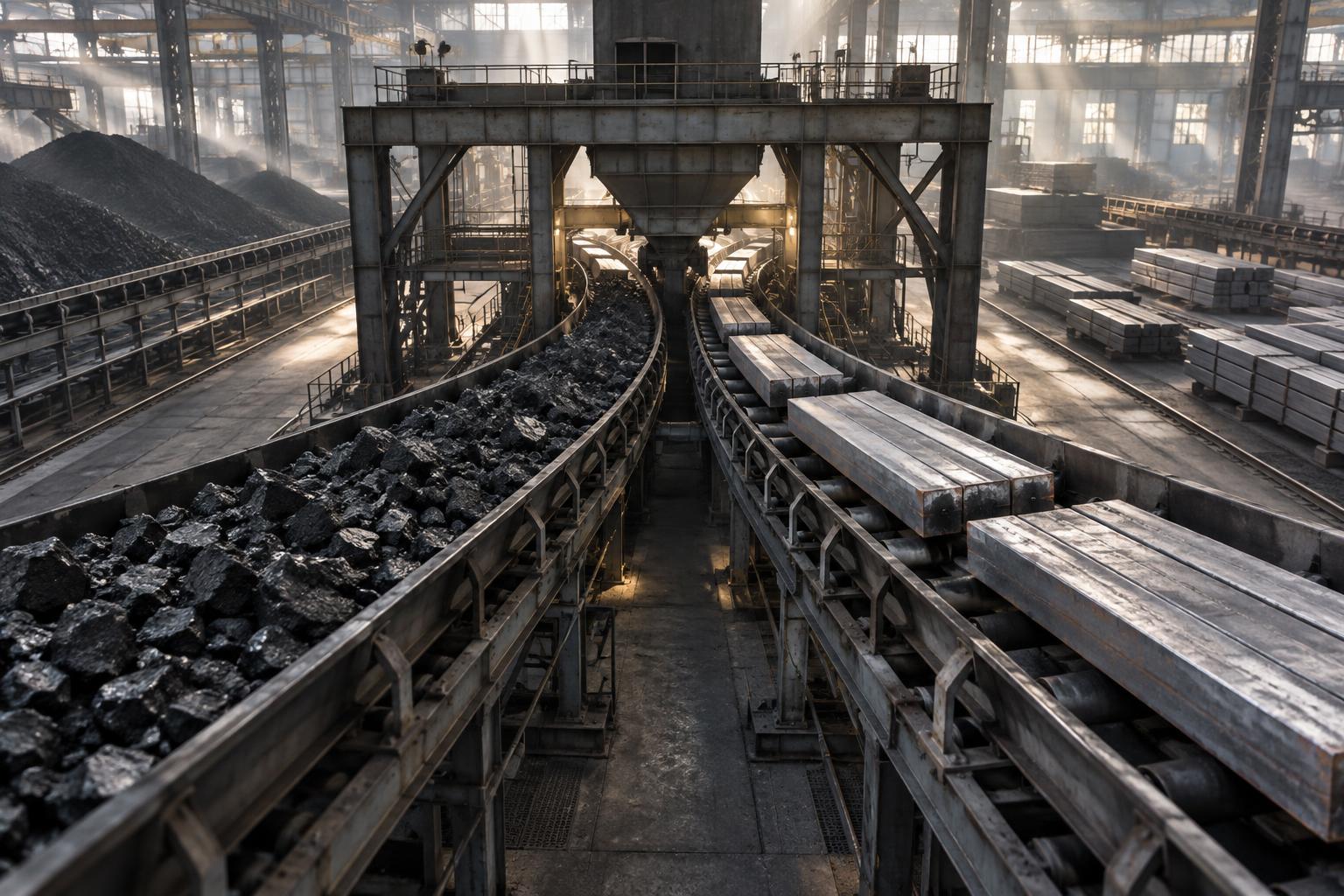
AI-generated image, not a photograph. This edition's article, audio and test are AI-generated and published automatically without prior human review. Sources · Editorial & AI Policy
Listen to today’s article
On 9 May 1950, French foreign minister Robert Schuman proposed an unexpected route to reconciliation with Germany: shared control of coal and steel. These industries supplied the means to make armaments; his plan was to give former enemies each other's economic success instead. French and German production would come under a common High Authority, open to other European countries and empowered to issue decisions. The gamble was political as much as industrial: cooperation would become an institutional commitment, rather than merely a promise to trade more. This was a proposal to prevent another war, not evidence that integration alone could guarantee peace.
Belgium, France, West Germany, Italy, Luxembourg and the Netherlands signed the resulting European Coal and Steel Community treaty in Paris on 18 April 1951. It entered into force on 23 July 1952, turning the declaration's ambition into an operating institution. Yet this foundation of European integration came with an expiry date: the treaty was designed to last 50 years and expired on 23 July 2002. The wider European project continued beyond it. That distinction matters: an industrial community could help initiate a lasting political transformation without its own founding treaty remaining in force indefinitely.
The arrangement also contained a check on executive power: an assembly drawn from national parliaments could dismiss the High Authority. Shared authority therefore did not mean an executive beyond parliamentary challenge, nor did it erase national sovereignty. The ECSC began the sequence of institutions—bodies exercising authority above the national level—that developed into today's European Union. The EU was not legally created by Schuman's declaration. Its concrete institutional inheritance is nevertheless visible: the High Authority was a precursor to today's European Commission. Coal and steel mattered not simply as traded goods, but as the starting point for governing together.