
Do you know what…?
Why did copyright owners destroy silent films for their silver?
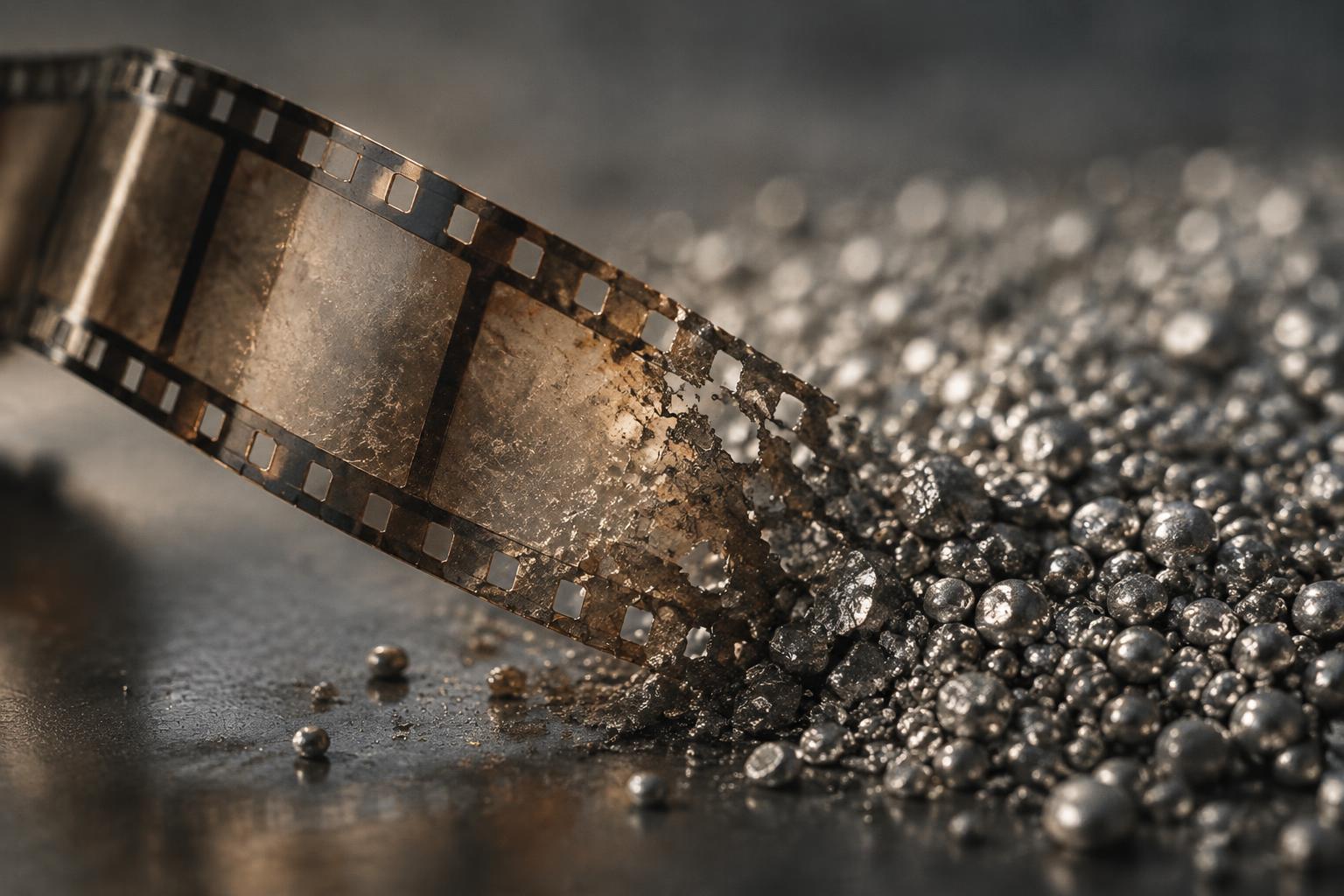
AI-generated image, not a photograph. This edition's article, audio and test are AI-generated and published automatically without prior human review. Sources · Editorial & AI Policy
Listen to today’s article
Some American silent features ended their lives not in a cinema or an archive, but as a source of recoverable silver. According to the Library of Congress, copyright owners destroyed certain films after their theatrical runs because they no longer regarded them as valuable. Photographic film uses light-sensitive silver compounds to record images; recovering the metal could therefore mean sacrificing the work. The decision reveals a stark distinction between owning a cultural object and safeguarding its future. Once the screenings were over, a film could be treated as disposable inventory rather than an record.
The scale of the disappearance is sobering. In a 2013 assessment reported by the Library of Congress, 70% of American silent feature films were found to be lost. Only 14% survived in their original 35 mm format, although survival in another format is not the same as disappearance. Silver recovery was not the only cause: nitrate fires also destroyed films, and the cited evidence does not establish each cause's share of the losses. These findings are a historical assessment, not a fresh count. They also suggest why judgements about an era's cinema must what is missing, not merely celebrate what remains.
Yet cultural memory need not stop at national borders. In 2022, the National Film Registry included Mardi Gras Carnival, filmed in New Orleans in 1898 and long considered lost before a copy was found at the Eye Filmmuseum in the Netherlands. This archival example does not establish a survival rate for features. Registry selections recognise cultural, historical or aesthetic importance; recognition alone does not guarantee physical preservation. The case illustrates why international archival cooperation matters. Ownership can determine what is discarded; can change what becomes available again. What survives is not simply what audiences loved, but what someone kept.