
Do you know what…?
How did Australia II's comeback take the America's Cup from Rhode Island to Fremantle?
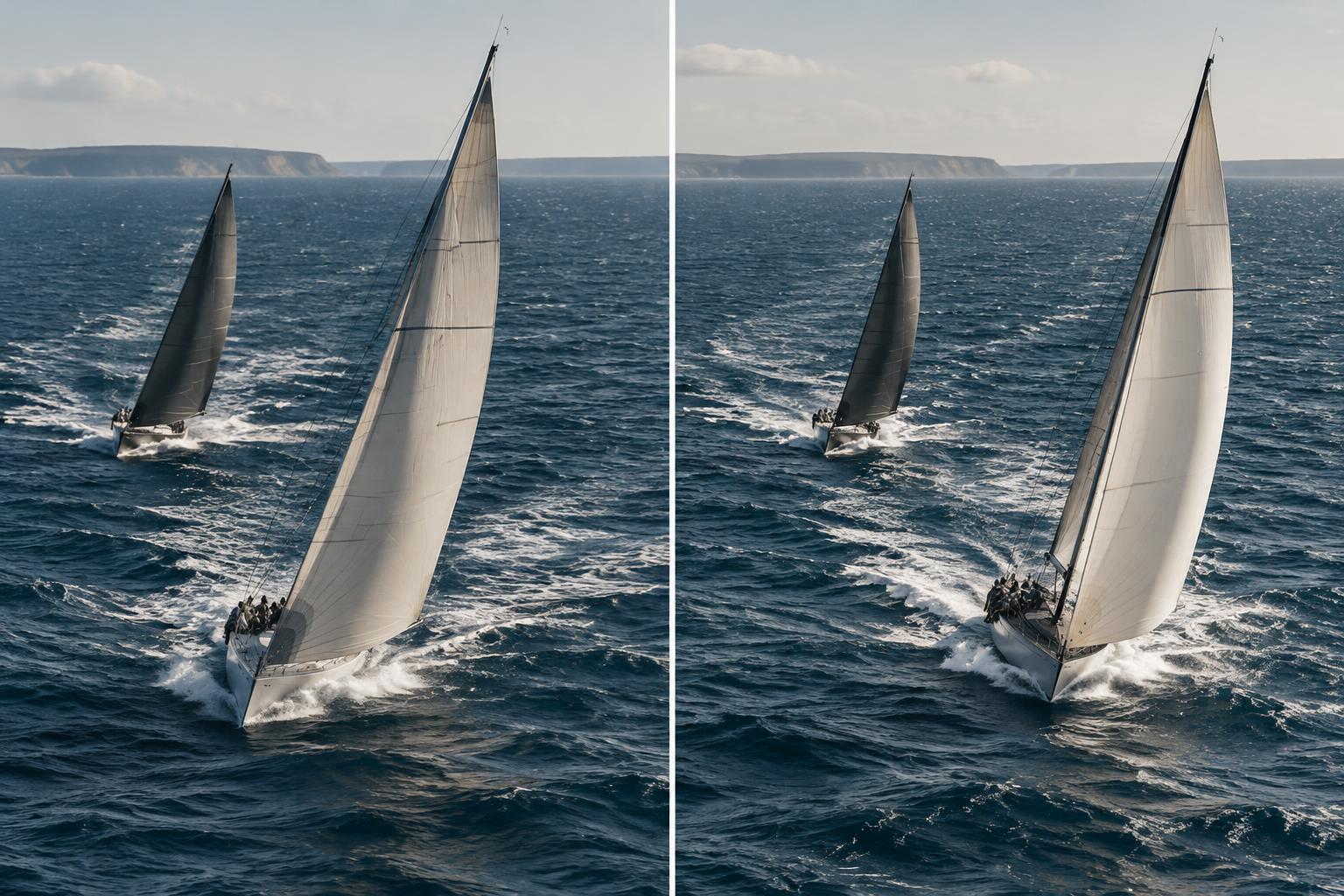
AI-generated image, not a photograph. This edition's article, audio and test are AI-generated and published automatically without prior human review. Sources · Editorial & AI Policy
Listen to today’s article
On 26 September 1983, Australia II won the America's Cup off Rhode Island, ending 132 years of American possession. The New York Yacht Club had held the trophy since 1851; now an Australian challenger had broken that continuity. John Bertrand skippered Australia II against Dennis Conner's Liberty in a match that began on 13 September. Behind the breakthrough lay a longer campaign: the Western Australian syndicate had already mounted three unsuccessful challenges. Built in Cottesloe by Steve Ward, the yacht carried a Perth-based crew that had trained rigorously before the challenger-selection races in Newport.
The result was a double comeback, not a procession by an unbeatable boat. Australia II trailed 1–3 after the opening four races of this best-of-seven match, leaving . It recovered to win 4–3, but also had to come from behind in the deciding race. That final recovery makes the turnaround more remarkable: restoring had not settled the contest. The Western Australian Museum highlights both the secretive keel design and the crew's preparation. Those elements belong together; the evidence does not establish a measured advantage for the keel or justify treating it as the sole explanation.
Victory changed the competition's geography as well as its holder: Fremantle hosted the subsequent defence in 1987. The legacy also has a physical anchor. In a 2023 announcement, the Western Australian Museum identified the WA Maritime Museum at Victoria Quay as Australia II's permanent home. The surviving yacht makes an otherwise distant sporting breakthrough tangible. Its story is a useful to accounts that reduce success to a technical masterstroke: preparation and innovation matter, but neither makes the result inevitable. A celebrated design still needed a crew capable of recovering when defeat was close.