
Do you know what…?
How did France turn Britain's deep-water refuge at Yorktown into a trap?
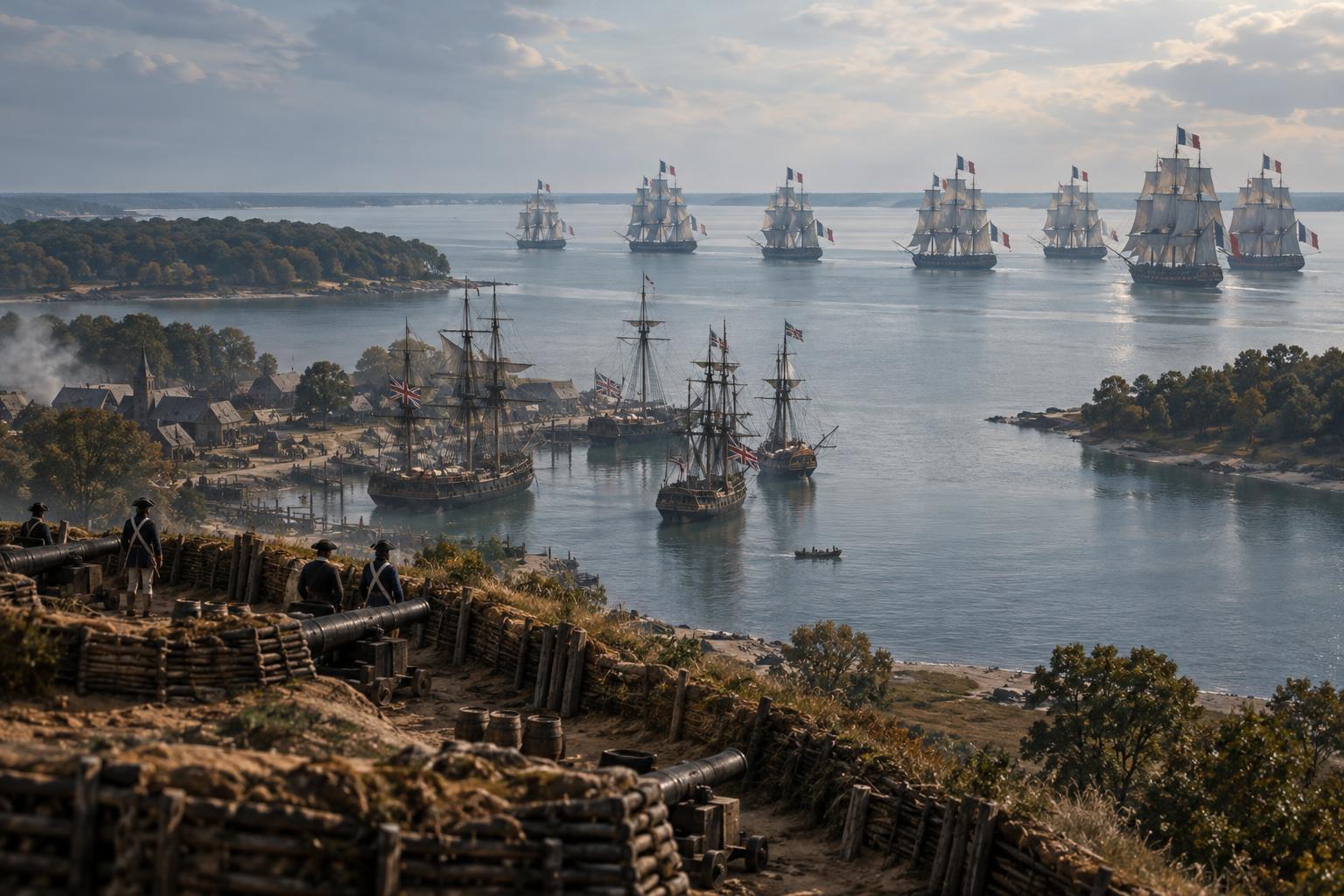
AI-generated image, not a photograph. This edition's article, audio and test are AI-generated and published automatically without prior human review. Sources · Editorial & AI Policy
Listen to today’s article
On 19 October 1781, Cornwallis's army surrendered at Yorktown to allied American and French forces. The British commander had chosen the town for its deep-water harbour, under orders to provide a protected base for Britain's fleet in the lower Chesapeake. Yet the harbour's value depended on who controlled the water beyond it. After the Battle of the Capes on 5 September, the British fleet returned to New York, while de Grasse's French fleet maintained a blockade. French naval control prevented the Royal Navy from reinforcing or evacuating Cornwallis's forces: the route meant to his position could no longer rescue it.
Washington had initially planned to attack British-held New York, but changed course when he learnt that the French fleet was heading for the Chesapeake. To keep British commanders , he ordered camps and large brick bread ovens near New York, then let false attack plans bearing his signature reach British hands. Infrastructure became a message: the preparations suggested an attack on New York while the allies moved south. American and French forces marched from Williamsburg to Yorktown on 28 September; by 9 October, their first siege trench was complete and artillery had been brought forward.
The surrender was a decisive achievement of the American–French alliance, not an exclusively American victory or the formal end of the war. Naval control enabled the land campaign whose success helped secure American independence. On this anniversary, that legacy has a tangible home at Yorktown Battlefield, part of Colonial National Historical Park. For 2024, the National Park Service estimates visitor spending associated with the whole park at $317.919 million in local economies, expressed in 2024 dollars. That is a heritage-tourism figure for the entire park—not Yorktown alone, park revenue or a price tag on independence.