
Do you know what…?
Why is a reaction’s product not always the end of the story?
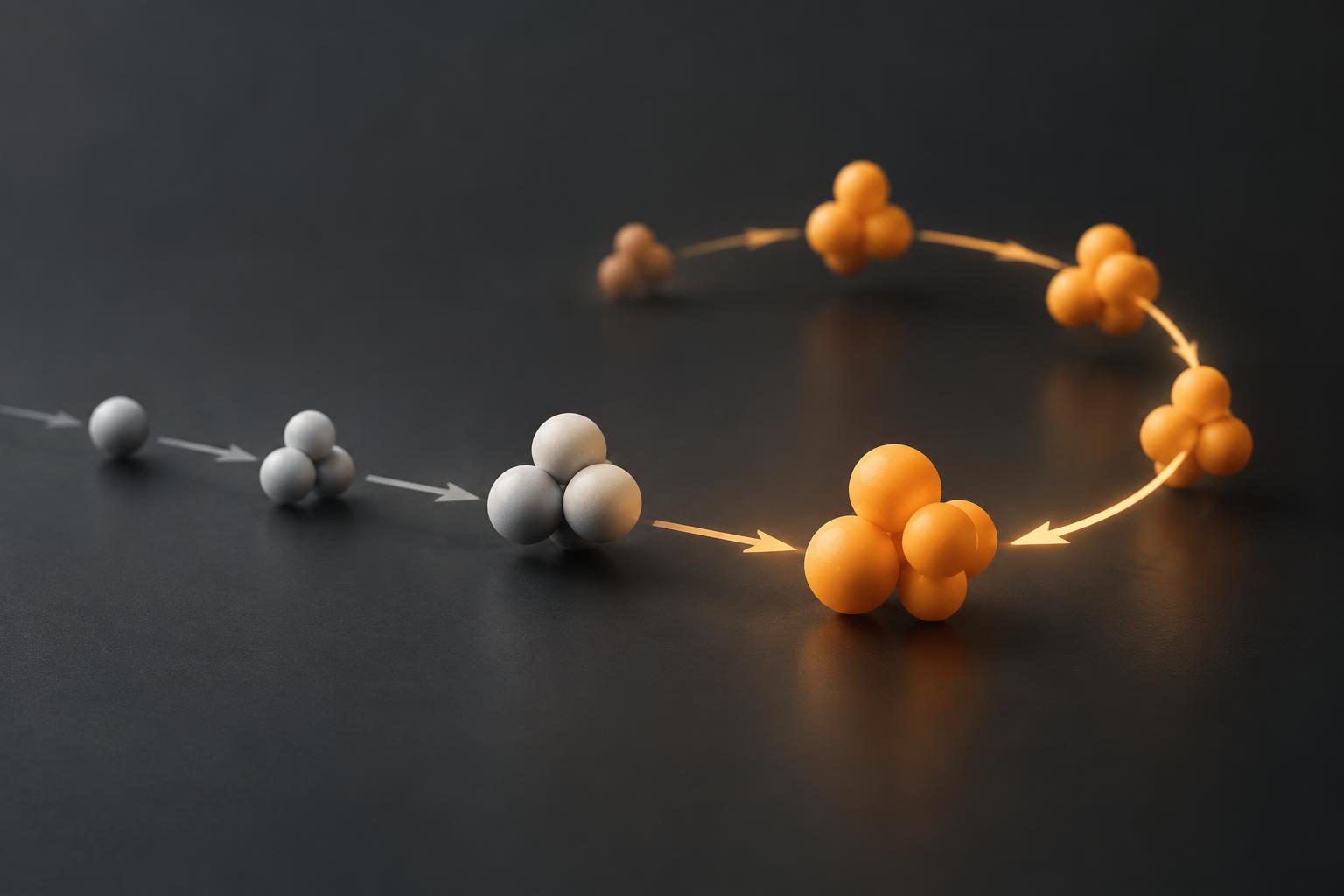
AI-generated image, not a photograph. This edition's article, audio and test are AI-generated and published automatically without prior human review. Sources · Editorial & AI Policy
Listen to today’s article
A reaction need not be a passive chain of changes: in autocatalysis, a product helps the reaction that produces it. That is the general principle, not a description of a particular experimental procedure. On 7 October 2026, the Royal Swedish Academy of Sciences announced that Henri B. Kagan and Kenso Soai would share the chemistry Nobel for work concerning effects and autocatalysis in asymmetric organic synthesis. In the announcement interview, committee member Peter Somfai traced Kagan’s recognised discoveries to 1986. The award therefore brings a long research history into view, rather than marking the sudden appearance of an entirely new subject.
The conceptual distinction is worth spelling out. A relationship means that a change in an input does not necessarily produce a proportional change in an outcome. Autocatalysis, by contrast, concerns a product’s role in promoting the reaction itself. These concepts describe different aspects of chemical behaviour; neither is a guarantee of a particular experimental result. To put the recognition , distinguish a broad scientific principle from a verified account of what a specific reaction achieves. The prize provides an occasion to examine that distinction, not evidence that chemistry has explained how life began or that a synthesis result establishes a medicine’s safety.