
Do you know what…?
Why put Olympic swimming inside an American-football stadium?
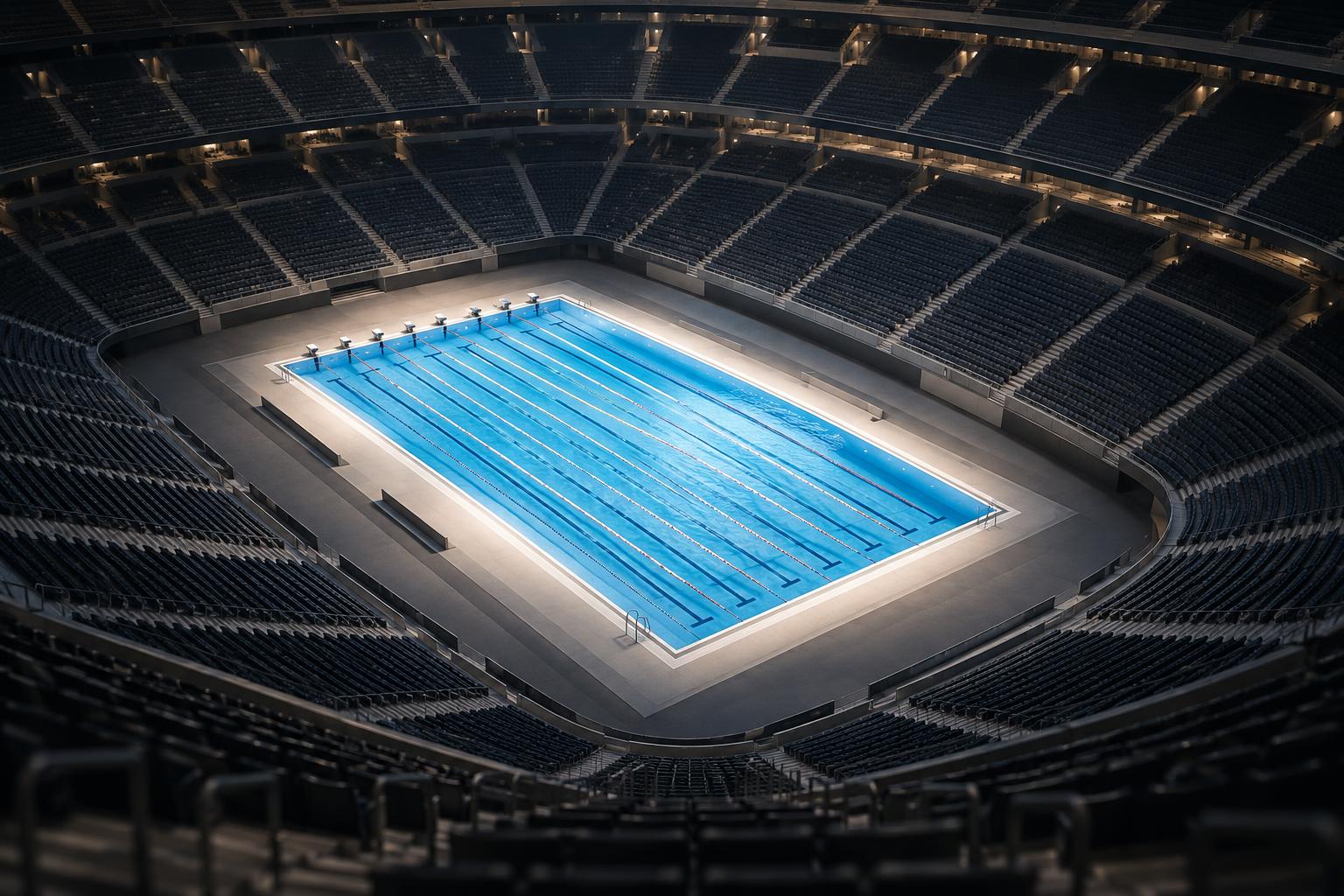
For the 2028 Olympics, LA28 has assigned swimming to the existing American-football stadium in Inglewood used by the Los Angeles Rams and Los Angeles Chargers. The setting is unexpected, but the scale is just as striking: in June 2024, organisers announced a planned swimming capacity of 38,000 seats, describing it as a record for Olympic swimming. That is a proposed seating configuration, not an attendance figure. Rather than commissioning a permanent swimming arena, the plan puts an established sporting building to a very different use.
The point is not to whenever a sport needs a stage. The International Olympic Committee’s April 2026 venue guide describes a plan without new permanent structures built specifically for the Games. In its July 2026 account, the IOC again placed reuse at the heart of the strategy. This reverses the planning question: instead of asking what a city should build for the Olympics, ask how the Olympics can fit what is already there. Existing venues become the starting point, rather than an obstacle to a spectacle.
The stadium also illustrates how demanding that approach can be: LA28 announced in May 2025 that the Opening Ceremony on 14 July 2028 would be shared between the Inglewood stadium and the Los Angeles Memorial Coliseum. Different functions must therefore be within the same venue plan. Reuse does not mean that construction, temporary installations or public expenditure disappear. Nor does it establish that the Games will be profitable or environmentally neutral. The distinction is between limiting permanent additions and eliminating the work of hosting—a strategy, not a guarantee.